How You Play Packtypes
Packtypes is built on the same Jungian foundations that underpin MBTI, Belbin, StrengthsFinder, Insights and every major psychometric model. But that’s where the similarity ends.
Instead of being constrained by labels and stereotypes generated by an algorithm, simply ask someone whose seen you in action recently, for psychometrically balanced feedback – Psychometric Feedback Cards, make this easy enabling anyone to give helpful feedback to anyone.
With Psychometric Feedback, you’re in control. You decide what to achieve and can easily identify the behavioural adjustments needed to get there.
Where tests define limits, Psychometric Feedback expands them. Small behavioural improvements compound daily. Experimentation replaces avoidance. Capability grows. Confidence grows. Your behavioural range grows, helping you do everything a little better.
This is Continuous Human Improvement in practice: When every day is a personal-best day, growth and progress is inevitable.
A simple innovation - But one that changes everything

Start Playing:
Decide Who You Want Feedback From
That includes yourself - You can feedback to yourself
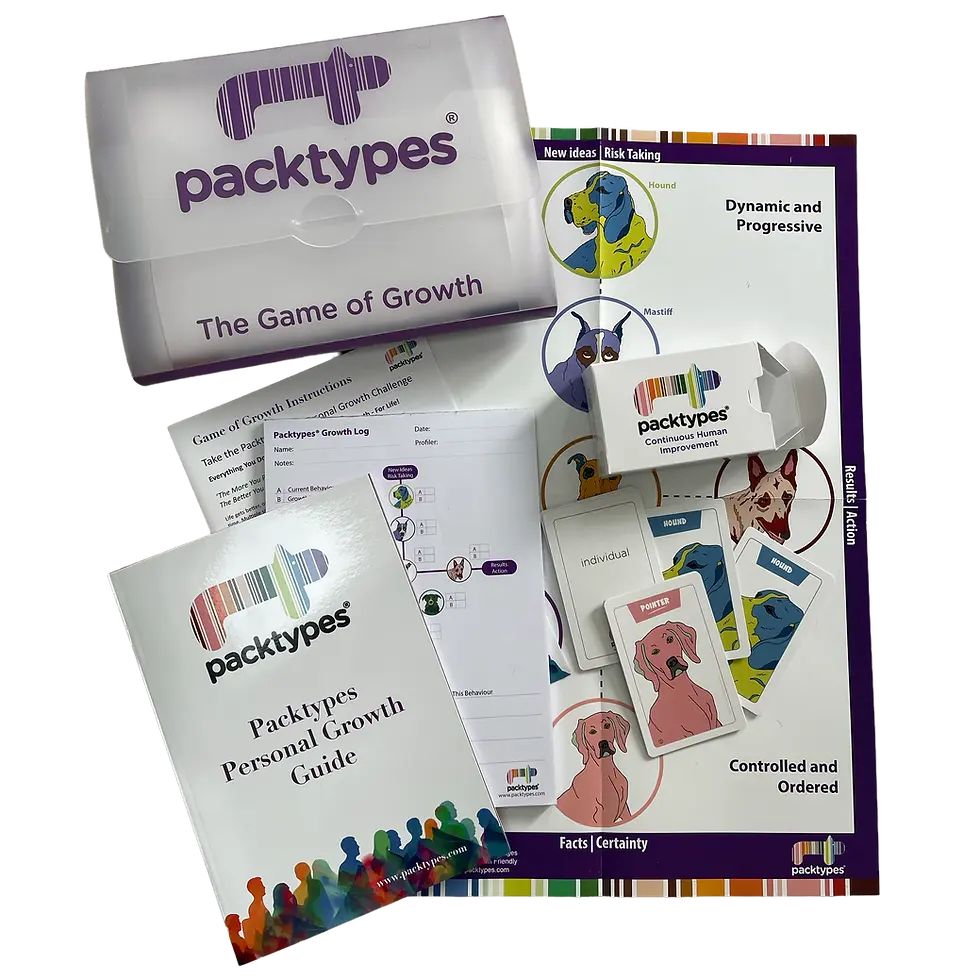
The person offering feedback goes through the pack and pick 12 cards to describe the behaviour of the person being Packtyped. Do it quickly. No overthinking.
They turn the cards over and describe the behaviours they've observed, related to each word they chose. Talk about the impact each behaviour has had on you. Refer to your Packtypes Guide for extra help.
Talk about (or reflect on) the impact each behaviour is having. Refer to the Packtypes Guide for extra help.
Once they’ve been through the behaviours they’ve seen, ask them to profile you again, this time profiling the behaviours they believe will maximise your performance happiness and growth.
These are your Growth Behaviours.
Focus on two or three Growth Behaviours. These become you 1% Growth Challenge. Consciously and mindfully practice these, asking for more feedback as you go.
The more frequently these words appear in the feedback you are given – the more you are improving and the faster you are growing. Once you have started to improve, consider resetting your growth behaviours. This way growth and improvement become constant – 1% at a time - making progress and growth inevitable.
Repeat for every important area of your life.
Meet The Packtypes

Coachdog
The 'people, people', the only Packtype that genuinely enjoys listening.
Put other people first and like everyone to be happy.
Tend to avoid conflict and delivering bad news.
Can be taken advantage of by others.

Retriever
The most dependable Packtype, enjoy being thorough and sorting out problems.
Know what they like and like what they know.
Sometimes rather opinionated and prone to resisting change.
Can be hard to argue with.

Terrier
Hard working and tenacious, they like keeping busy and enjoy being helpful.
Happy being part of a team. Live life in the moment so not the best at planning ahead.
Can be a bit 'short' when too busy 'doing' to listen or talk.

Sheepdog
Love planning and organising everything and everyone. Good at keeping things on track.
Can be reserved about expressing emotions and feelings.
Need to avoid appearing disinterested and being over controlling.

Hound
The creative ones, known for their individuality, eccentricity and flair.
Enjoy thinking outside the box and happy to take risks.
Short attention span and love daydreaming.
Not great at detail, routine or following instructions.

Pointer
The most serious Packtype, they enjoy facts and learning.
Thrive in management, analysis, finance, academic and law related roles.
Have a rather black and white view of the world which they can occasionally try and impose on others.

Mastiff
Natural communicators who love connecting and presenting.
Open and interested, they pick up on new trends fast.
Can sell anything to anyone!
Occasionally go 'over the top' and can be prone to over-promising.

Guard Dog
Dynamic and challenging, like to focus on achieving goals and getting results.
Thrive in management, analysis, finance, academic and law related roles.
Have a rather black and white view of the world which they can occasionally try and impose on others.